
What Are Dental Implants Losing a tooth can affect much more than your smile. A missing tooth can make chewing difficult, affect the way you speak, alter your bite and, over time, contribute to changes in the surrounding teeth and jawbone.
Fortunately, modern dentistry offers several options for replacing missing teeth. Among them, dental implants are a widely used treatment option for replacing one or more missing teeth and restoring both function and appearance.
Dental implants are designed to replace the missing tooth root and support a dental crown, bridge or denture. Unlike traditional removable dentures, an implant is placed within the jawbone, creating a stable foundation for tooth replacement.
But are dental implants suitable for everyone? How is the procedure performed? Are dental implants painful? How much do they cost? How long does recovery take?
This comprehensive guide explains everything you need to know about dental implants, including the procedure, benefits, cost, recovery, risks and aftercare.
What Are Dental Implants What Are Dental Implants?
A dental implant is a small biocompatible fixture that is surgically placed into the jawbone to replace the root portion of a missing tooth.
A typical implant-supported tooth has three main components:
What Are Dental Implants 1. Dental Implant
The implant acts as an artificial tooth root and is placed inside the jawbone.
What Are Dental Implants 2. Abutment
The abutment connects the implant to the final dental restoration.
What Are Dental Implants 3. Dental Crown
The crown is the visible portion that resembles the natural tooth.
Together, these components can create a stable tooth replacement that looks and functions much like a natural tooth.
Depending on the patient’s situation, implants can also support bridges or dentures rather than just a single crown.
What Are Dental Implants Why Are Dental Implants Needed?
A missing tooth can affect oral function in several ways.
When a tooth is lost, the surrounding teeth may gradually shift into the empty space. The bone supporting the missing tooth may also undergo resorption because it no longer receives the same functional stimulation.
A missing tooth can contribute to:
- Difficulty chewing
- Changes in bite
- Food getting trapped in the space
- Shifting of neighbouring teeth
- Changes in appearance
- Reduced confidence while smiling
- Loss of supporting bone
- Difficulty maintaining proper oral hygiene around adjacent teeth
Replacing the missing tooth can help restore function and improve the overall balance of the mouth.
What Are Dental Implants Who Can Get Dental Implants?
Many adults with missing teeth can potentially be candidates for dental implants.
However, suitability depends on several factors, including:
- Overall oral health
- Jawbone volume and quality
- Gum health
- Number and location of missing teeth
- General health
- Smoking habits
- Oral hygiene
- Bite and functional requirements
- Ability to maintain regular dental care
A detailed dental examination is necessary before deciding whether implants are appropriate.
What Are Dental Implants Dental Implant Procedure: Step by Step
The dental implant process is usually planned in stages.
Step 1: Consultation and Dental Examination
The first stage is a detailed consultation.
The dentist evaluates:
- Missing tooth or teeth
- Gum health
- Remaining teeth
- Bite
- Jawbone
- Existing dental restorations
- Medical and dental history
- Aesthetic requirements
Photographs, digital scans and dental X-rays may also be used.
What Are Dental Implants Step 2: Digital Planning
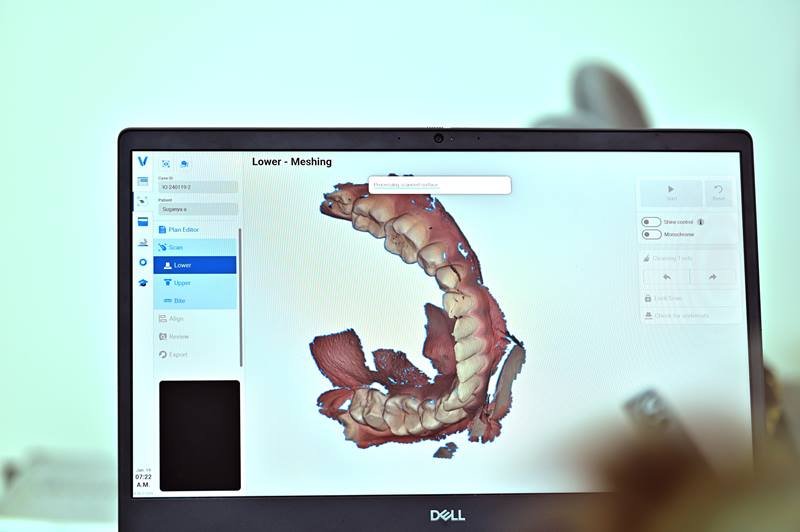
Modern implant dentistry can involve digital treatment planning.
Depending on the case, your dentist may use:
- Digital intraoral scanning
- Digital photographs
- Panoramic X-rays
- CBCT imaging
- Computer-assisted implant planning
These tools can help the dental team evaluate bone anatomy, neighbouring structures and the proposed implant position.
Digital planning is particularly useful when precision is important.
What Are Dental Implants Step 3: Bone Evaluation
Adequate bone is important for successful implant placement.
If there has been significant bone loss after tooth extraction, periodontal disease or prolonged tooth loss, the available bone may not initially be sufficient for implant placement.
In selected cases, additional procedures such as:
- Bone grafting
- Guided bone regeneration
- Sinus augmentation
may be considered.
Not every patient requires bone augmentation.
Step 4: Tooth Extraction When Necessary
If a damaged tooth is still present but cannot be restored, extraction may be necessary before implant placement.
Depending on the condition of the tooth and surrounding bone, an implant may sometimes be placed immediately after extraction.
In other situations, the extraction site may need time to heal before implant placement.
The timing is decided according to the individual clinical situation.
What Are Dental Implants Step 5: Implant Placement
During implant placement, the dentist creates a carefully planned site in the jawbone and places the implant.
Local anaesthesia is generally used to keep the procedure comfortable.
Depending on the complexity of the case, sedation or other options may be considered for selected patients.
After placement, the implant needs time to integrate with the surrounding bone.
This biological process is known as osseointegration.
What Are Dental Implants What Is Osseointegration?
Osseointegration is the process by which bone forms around and integrates with the dental implant surface.
This creates a stable foundation for the final restoration.
The length of healing varies depending on:
- Implant location
- Bone quality
- Bone quantity
- Surgical procedure
- Patient-specific healing
- Whether bone grafting was performed
Your dentist will determine when the implant is ready for restoration based on clinical assessment.
What Are Dental Implants Step 6: Abutment Placement
Once the implant has adequately integrated with the bone, an abutment may be attached.
The abutment provides a connection between the implant and the final restoration.
Depending on the treatment plan, the abutment may be placed during the initial surgical stage or during a later appointment.
What Are Dental Implants Step 7: Digital Impression or Scan
The dentist may use an intraoral scanner or conventional impression technique to record the position of the implant.
Digital scanning can help create an accurate virtual model for designing the final restoration.
What Are Dental Implants Step 8: Crown Placement
The final crown is fabricated according to the planned size, shape, colour and functional requirements.
The crown is then attached to the implant.
The dentist checks:
- Bite
- Contacts with adjacent teeth
- Shape
- Aesthetics
- Function
- Comfort
The goal is to create a restoration that integrates naturally with your smile.
What Are Dental Implants How Long Does the Dental Implant Procedure Take?
There is no single timeline for every implant case.
A straightforward single-tooth implant may involve several stages spread over a few months, while more complex cases may require additional procedures and a longer healing period.
Treatment time can depend on:
- Bone condition
- Need for extraction
- Need for bone grafting
- Implant location
- Number of implants
- Gum health
- Healing response
- Type of restoration
Your dentist can provide an estimated timeline after completing the diagnostic evaluation.
What Are Dental Implants Are Dental Implants Painful?
This is one of the most common concerns among patients.
Dental implant placement is usually performed under local anaesthesia, so the surgical procedure itself should be comfortable.
After the procedure, some patients may experience:
- Mild discomfort
- Swelling
- Bruising
- Tenderness
- Minor bleeding
These symptoms generally improve during the initial healing period.
Your dentist may provide specific aftercare instructions and medication recommendations depending on your case.
If you experience severe pain, persistent bleeding, significant swelling or other concerning symptoms, contact your dental team promptly.
What Are Dental Implants Dental Implant Recovery
Recovery varies depending on the type and extent of treatment.
After implant placement, you may be advised to:
- Follow the prescribed medication schedule.
- Avoid disturbing the surgical site.
- Maintain good oral hygiene as instructed.
- Avoid smoking.
- Follow dietary recommendations.
- Avoid excessive physical activity for the period recommended by your dentist.
- Attend scheduled follow-up appointments.
The soft tissues generally recover sooner than the bone.
The implant itself may require several weeks or months for complete biological integration.
What Are Dental Implants What Can You Eat After Dental Implant Surgery?
Your dentist may recommend soft foods during the initial healing period.
Depending on the procedure, suitable foods may include:
- Soft rice
- Idli
- Soft dosa
- Khichdi
- Yogurt
- Eggs
- Soft vegetables
- Soups
- Smooth foods
- Mashed foods
Avoid very hard, crunchy or sticky foods that could irritate the surgical area.
Do not chew directly over the implant site unless your dentist specifically advises that it is safe.
What Are Dental Implants Benefits of Dental Implants
Dental implants can provide several benefits when appropriately planned and maintained.
1. Natural-Looking Appearance
Implant-supported crowns can be designed to resemble natural teeth in shape, size and colour.
2. Improved Chewing
A stable tooth replacement can make eating more comfortable compared with some removable options.
3. Stability
Because the implant is anchored within the jawbone, it can provide a stable foundation for the replacement tooth.
4. No Need to Reduce Adjacent Healthy Teeth
A single implant-supported crown generally does not require the neighbouring teeth to be prepared in the same way as a conventional tooth-supported bridge.
5. Bone Preservation
Implant placement can help maintain bone in the area of the missing tooth, although bone changes can still occur over time.
6. Improved Confidence
A stable and natural-looking restoration can make patients feel more comfortable while speaking and smiling.
7. Long-Term Tooth Replacement
With appropriate planning, good oral hygiene and regular maintenance, dental implants can provide a long-lasting solution for missing teeth.
Dental Implants vs Dental Bridges
Both implants and bridges can replace missing teeth, but they work differently.
| Feature | Dental Implants | Dental Bridges |
|---|---|---|
| Support | Jawbone | Usually adjacent teeth |
| Surgery | Usually required | Usually not surgical |
| Adjacent teeth | Generally preserved | May require preparation |
| Bone stimulation | Implant provides functional stimulation | Does not replace the tooth root |
| Removability | Usually fixed | Usually fixed |
| Treatment timeline | Often longer | Often shorter |
| Suitability | Depends on bone and health | Depends on neighbouring teeth |
The appropriate option depends on the condition of the missing tooth area, surrounding teeth, bone, gums and the patient’s preferences.
What Are Dental Implants Dental Implants vs Dentures
Dentures are removable appliances used to replace multiple missing teeth or an entire arch.
Implants can provide fixed or implant-retained solutions depending on the treatment plan.
Traditional dentures may be appropriate for some patients, while implant-supported dentures may provide increased stability in selected cases.
A dental consultation is necessary to determine which option is suitable.
What Are Dental Implants Single Dental Implant
A single dental implant can be used to replace one missing tooth.
The typical treatment includes:
Implant → Abutment → Crown
This approach can restore both the appearance and function of the missing tooth while avoiding preparation of neighbouring teeth in many cases.
Single implants are commonly used for missing:
- Front teeth
- Premolars
- Molars
The treatment plan differs depending on the location and available bone.
What Are Dental Implants Multiple Dental Implants
Patients missing several teeth may require multiple implants.
Depending on the number and location of missing teeth, implants can support:
- Individual crowns
- Implant-supported bridges
- Partial dentures
- Other fixed or removable restorations
The dentist will determine the number and position of implants based on function, anatomy and restorative requirements.
What Are Dental Implants Full-Mouth Dental Implants
Patients who have lost most or all of their teeth may have different implant-supported treatment options.
Depending on the individual case, treatment may involve strategically positioned implants supporting a full-arch restoration.
Full-mouth rehabilitation requires comprehensive planning of:
- Bone
- Gums
- Bite
- Facial aesthetics
- Implant position
- Prosthetic design
- Cleaning access
- Long-term maintenance
It is not simply a matter of placing implants wherever bone is available.
What Are Dental Implants Dental Implants for Front Teeth

Replacing a missing front tooth requires particular attention to aesthetics.
The dentist may evaluate:
- Gum level
- Gum thickness
- Bone contour
- Tooth colour
- Tooth shape
- Smile line
- Adjacent teeth
- Facial proportions
The final restoration needs to blend naturally with the surrounding teeth.
Patients seeking an aesthetic solution may also discuss their treatment with a Smile specialist in Chennai or Smile Designer in Chennai, depending on their overall smile requirements.
Dental Implants for Back Teeth
Back teeth play an important role in chewing.
Implant treatment for molars requires consideration of:
- Available bone
- Bite forces
- Implant position
- Adjacent teeth
- Nerve location
- Sinus anatomy in the upper jaw
A detailed radiographic assessment is important before implant placement.
Dental Implants and Bone Loss
Bone loss is common after tooth loss.
The longer a tooth has been missing, the more bone resorption may occur in the affected area.
However, bone loss does not automatically mean that implants are impossible.
Depending on the amount and location of bone deficiency, procedures such as bone augmentation may sometimes make implant placement possible.
A CBCT scan may be recommended to assess three-dimensional bone anatomy in selected cases.
Do You Need a Bone Graft Before Dental Implants?
Not everyone needs bone grafting.
A bone graft may be considered when there is insufficient bone volume to achieve the planned implant position.
Possible reasons for inadequate bone include:
- Long-standing tooth loss
- Advanced gum disease
- Previous infection
- Trauma
- Bone resorption
- Anatomical limitations
The need for grafting can only be determined after clinical and radiographic assessment.
Dental Implants and Gum Disease
Healthy gums are important for implant treatment.
Patients with active periodontal disease may need gum treatment before implant placement.
Poorly controlled gum disease can affect the tissues around implants and increase the risk of complications.
Therefore, maintaining gum health is an important part of implant planning and long-term maintenance.
Can Smokers Get Dental Implants?
Smoking can negatively affect oral tissues and healing.
It may increase the risk of complications associated with implant treatment and can also negatively affect gum health.
If you smoke, discuss this honestly with your dentist before implant treatment.
Your dental team can explain how smoking may affect healing and what measures may be appropriate.
Dental Implants and Diabetes
Diabetes does not automatically rule out implant treatment.
However, uncontrolled diabetes can affect healing and increase the risk of oral complications.
Patients with diabetes should discuss their medical condition and medications with their dental team.
Good medical and oral health management is important before and after implant treatment.
How Much Do Dental Implants Cost?
The cost of dental implants varies from patient to patient.
There is no single fixed price because implant treatment can involve multiple components and procedures.
Factors that may influence the overall cost include:
- Number of implants
- Implant system used
- Type of implant
- Bone quality
- Need for bone grafting
- Need for tooth extraction
- Type of crown
- Abutment
- Digital planning
- Imaging
- Complexity of the case
- Temporary restoration
- Final prosthesis
When comparing implant costs, it is important to understand exactly what is included in the treatment plan.
A low initial quote may not necessarily include every stage of treatment.
Ask your dentist for a detailed estimate covering the implant, surgery, abutment, crown and any additional procedures that may be required.
How Long Do Dental Implants Last?
Dental implants are designed as a long-term tooth replacement option.
However, their longevity depends on:
- Oral hygiene
- Gum health
- Bone health
- Smoking
- Bite forces
- Implant positioning
- Quality of restoration
- Regular maintenance
- Overall health
The implant itself may remain functional for many years, but the crown or other prosthetic component may require repair or replacement over time.
Regular professional monitoring is therefore important.
How to Care for Dental Implants
Implants do not require complicated daily care, but they do require consistent maintenance.
Brush Twice Daily
Use a suitable toothbrush and fluoride toothpaste.
Clean Between Teeth
Use floss, interdental brushes or other cleaning aids recommended by your dentist.
Pay Attention to the Gum Around the Implant
Bleeding, swelling or tenderness around an implant should not be ignored.
Attend Regular Check-Ups
Your dentist can monitor:
- Implant stability
- Gum health
- Bone levels
- Crown condition
- Bite
- Oral hygiene
Avoid Using Teeth as Tools
Do not use implant-supported teeth or natural teeth to open packages or bite excessively hard objects.
What Is Peri-Implantitis?
Peri-implantitis is an inflammatory condition affecting the tissues around a dental implant and can be associated with progressive supporting bone loss.
Signs may include:
- Redness
- Swelling
- Bleeding
- Pus
- Discomfort
- Increasing mobility in advanced cases
Early detection and professional management are important.
Good oral hygiene and regular implant maintenance can help reduce the risk of complications.
Are Dental Implants Safe?
Dental implants are a well-established treatment option, but like any surgical procedure, they carry potential risks.
Possible complications can include:
- Infection
- Bleeding
- Swelling
- Implant failure
- Nerve-related symptoms
- Sinus complications in selected upper-jaw cases
- Bone loss around the implant
- Mechanical complications
- Problems with the restoration
Careful diagnosis and treatment planning can help identify and manage individual risks.
Your dentist should discuss the benefits, alternatives and potential complications before treatment.
What Happens If a Dental Implant Fails?
Although many implants function successfully, implant failure can occur.
Possible contributing factors include:
- Poor healing
- Infection
- Insufficient bone
- Excessive forces
- Smoking
- Poor oral hygiene
- Medical factors
- Problems with implant placement
If an implant does not integrate with the bone or later develops significant complications, the dentist will assess the cause and discuss appropriate options.
In selected cases, replacement may be possible after healing and reassessment.
Dental Implants and Invisalign
Patients who have missing teeth and tooth alignment problems may require a coordinated treatment plan.
In some cases, orthodontic treatment such as Invisalign may be considered before or after implant placement.
The order depends on:
- Tooth position
- Available space
- Bite
- Implant location
- Overall treatment plan
If you are considering both tooth replacement and orthodontic treatment, consultation with an Invisalign specialist in Chennai can help determine whether alignment should be addressed as part of the overall plan.
Dental Implants and Smile Design
Replacing a missing tooth is not always only about filling an empty space.
The final restoration should consider the overall smile.
For patients who have additional aesthetic concerns, implant treatment may be combined with other procedures such as:
- Veneers
- Crowns
- Teeth whitening
- Gum contouring
- Orthodontic treatment
- Composite bonding
A Smile Designer in Chennai can assess the overall smile when aesthetic rehabilitation involves multiple teeth.
Dental Implants for Older Adults
Age alone does not necessarily prevent a person from receiving dental implants.
The more important considerations include:
- General health
- Bone condition
- Gum health
- Oral hygiene
- Medical conditions
- Medications
- Ability to undergo treatment and maintain the implant
Older adults may benefit from implant-supported solutions depending on their individual needs.
Dental Implants for Young Adults
For younger patients, implant placement is generally considered only after jaw growth has sufficiently completed.
Premature implant placement can create problems because the surrounding natural teeth and jaw may continue to develop.
A dentist or appropriate specialist should evaluate the patient’s growth and dental development before treatment.
How to Prepare for Dental Implant Treatment
Before implant surgery, your dentist may advise you to:
- Complete required dental examinations.
- Treat active gum disease.
- Address existing infections.
- Maintain good oral hygiene.
- Provide a complete medical history.
- Inform your dentist about medications.
- Follow preoperative instructions.
- Arrange appropriate post-treatment support if necessary.
Following instructions carefully can make the treatment process smoother.
Dental Implant Aftercare: What to Avoid
During the initial healing period, your dentist may advise avoiding:
- Smoking
- Alcohol where medically or dentally contraindicated
- Very hard foods
- Excessive pressure on the surgical site
- Touching the implant site unnecessarily
- Vigorous rinsing immediately after surgery
- Strenuous activity for the period recommended
Always follow the specific instructions provided by your treating dentist because aftercare can vary between procedures.
Frequently Asked Questions About Dental Implants
1. Are dental implants painful?
Implant placement is performed under local anaesthesia, so the procedure itself should be comfortable. Mild pain, swelling or soreness can occur during recovery.
2. How long does a dental implant take?
The overall treatment can take several weeks to several months depending on healing, bone condition, grafting requirements and the type of restoration.
3. How much do dental implants cost?
The cost varies according to the number of implants, implant system, crown, bone condition, additional procedures and complexity of treatment.
4. Can dental implants replace one missing tooth?
Yes. A single dental implant can support an individual crown to replace one missing tooth.
5. Can dental implants replace multiple teeth?
Yes. Multiple implants can support individual crowns, implant bridges or other restorations depending on the case.
6. Can I get implants if I have bone loss?
Possibly. Some patients with bone loss may require bone grafting or another augmentation procedure before or during implant treatment.
7. Can smokers get dental implants?
Smoking may increase the risk of complications and affect healing. Discuss your smoking habits with your dentist before treatment.
8. Do dental implants look natural?
A well-planned implant restoration can be designed to closely resemble the surrounding natural teeth.
9. How long do dental implants last?
Dental implants are intended to be a long-term tooth replacement solution, but their longevity depends on oral hygiene, gum health, bite, maintenance and other individual factors.
10. Do dental implants require special cleaning?
Implants require regular oral hygiene. Your dentist may recommend specific brushing and interdental cleaning techniques depending on the implant restoration.
11. Are dental implants better than dentures?
Implants and dentures are different treatment options. Suitability depends on the patient’s oral health, bone, number of missing teeth, preferences and treatment goals.
12. Can dental implants be placed immediately after extraction?
In selected cases, immediate implant placement may be possible. It depends on factors such as infection, bone quality, tooth condition and the ability to achieve appropriate implant stability.
Why Choose Dr.D’s Dentistry for Dental Implants?
Choosing the right dental team is an important part of implant treatment.
If you are searching for a Best Dental Clinic in Chennai for dental implants, look for a clinic that provides detailed diagnosis, appropriate treatment planning, modern technology and comprehensive restorative care.
At Dr.D’s Dentistry, dental implant treatment is planned according to the individual patient’s oral health, bone condition, aesthetic requirements and functional needs.
Patients searching for an Implant Specialist in Chennai can discuss their concerns, imaging and treatment options during a detailed consultation.
Dr.D’s Dentistry is conveniently located nearby to Royapettah and is accessible to patients from Mylapore, Alwarpet and Gopalapuram.
If you are searching online for:
- Best Dental Clinic near me
- Best Dentist near me
- Best Dental Clinic within 1 KM
- Best Affordable Dental Clinic in Chennai
- Implant Specialist in Chennai
a proper clinical examination should be the starting point.
The goal of implant treatment is not simply to place an implant. It is to create a functional, healthy and aesthetically appropriate replacement that can be maintained for the long term.
When Should You Consider Dental Implants?
You may consider discussing dental implants with your dentist if you have:
- One or more missing teeth
- Difficulty chewing because of missing teeth
- An unstable denture
- A missing front tooth affecting your smile
- A missing back tooth affecting chewing
- Teeth that cannot be restored and require extraction
- A desire for a fixed tooth replacement
The right solution depends on your individual oral health and treatment requirements.
Final Thoughts
Dental implants have transformed the way missing teeth can be replaced. They can provide a stable foundation for crowns, bridges and implant-supported dentures while helping restore chewing function and the appearance of the smile.
However, successful implant treatment involves much more than placing an implant. Proper diagnosis, bone and gum assessment, digital planning where appropriate, precise surgery, a well-designed restoration and long-term maintenance all play important roles.
If you have a missing tooth, don’t assume that dentures, bridges or implants are automatically the right choice. A detailed dental consultation can help you understand your options.
Whether you are looking for a Best Dental Clinic in Chennai, an Implant Specialist in Chennai, a Best Dentist near me, or a Best Affordable Dental Clinic in Chennai, choose treatment based on your individual dental condition, long-term oral health and functional needs.
At Dr.D’s Dentistry, patients can discuss their dental implant requirements and receive a personalised treatment plan designed around their smile, oral health and overall dental goals.

