Procedure & How Long They Last Dental veneers are thin, custom-made restorations designed to improve the appearance of teeth. They are commonly used to address concerns such as discoloration, minor chips, uneven tooth shape, small gaps, and certain alignment or proportion issues.
Veneers can create a more balanced and attractive smile while preserving as much natural tooth structure as possible in appropriately selected cases.
With modern digital dentistry and advanced ceramic materials, veneers can be carefully planned to match the patient’s facial features, smile line, tooth proportions, and aesthetic goals.
If you are searching for the Best Dental Clinic in Chennai, a Smile Specialist in Chennai, a Smile Designer in Chennai, or a Best Dentist near me, understanding the cost, benefits, procedure, and lifespan of dental veneers can help you decide whether they are right for you.
Procedure & How Long They LastWhat Are Dental Veneers?
Dental veneers are thin coverings bonded to the front surface of teeth.
They are usually made from materials such as:
- Porcelain or dental ceramic
- Lithium disilicate ceramic
- Composite resin
The choice of material depends on the condition of the teeth, aesthetic requirements, functional considerations, budget, and treatment plan.
Dental veneers can be used to improve:
- Tooth color
- Tooth shape
- Tooth size
- Minor chips
- Small gaps
- Mild irregularities
- Certain discoloration
- Uneven tooth proportions
- Overall smile symmetry
Veneers are primarily a cosmetic treatment, although they can also provide some functional benefits in appropriately planned cases.
Procedure & How Long They Last Who Is a Good Candidate for Dental Veneers?
Veneers may be suitable for people who have healthy teeth and gums but are unhappy with certain aspects of their smile.
You may be considered for veneers if you have:
- Stained or discolored teeth
- Minor chipped teeth
- Small spaces between teeth
- Slightly irregular tooth shapes
- Teeth that appear too small or short
- Mild cosmetic imperfections
- Certain enamel defects
However, veneers are not suitable for everyone.
Patients with untreated cavities, active gum disease, inadequate tooth structure, severe grinding, or certain bite problems may need other treatment first.
A detailed dental examination is important before deciding on veneers.
Procedure & How Long They Last What Problems Can Dental Veneers Correct?
1. Discolored Teeth
Some stains do not respond well to traditional teeth whitening.
Veneers can be considered for selected cases of:
- Deep discoloration
- Certain intrinsic stains
- Discoloration caused by previous dental treatment
- Uneven tooth color
However, whitening may be a more conservative option when the discoloration can be effectively treated with bleaching.
Procedure & How Long They Last 2. Chipped Teeth
Small chips can sometimes be restored using composite bonding or veneers.
The appropriate treatment depends on the size and location of the chip and the amount of remaining tooth structure.
Procedure & How Long They Last 3. Small Gaps
Veneers can sometimes be used to close small spaces between teeth.
However, larger gaps or spaces caused by tooth-position problems may be better managed with orthodontic treatment.
Procedure & How Long They Last 4. Uneven Tooth Shape
Veneers can alter the shape and proportions of teeth to create a more harmonious smile.
Procedure & How Long They Last 5. Slightly Misaligned Teeth
In selected cases, veneers may improve the appearance of mildly irregular teeth.
However, veneers do not physically move teeth like braces or clear aligners.
If significant alignment correction is required, orthodontic treatment may be more appropriate.
Procedure & How Long They Last Benefits of Dental Veneers
Dental veneers offer several potential benefits.
Procedure & How Long They Last Natural-Looking Appearance
High-quality ceramic veneers can closely mimic the appearance of natural enamel.
They can be designed with appropriate:
- Color
- Shape
- Translucency
- Texture
- Proportions
Procedure & How Long They Last Improved Smile Aesthetics
Veneers can address multiple cosmetic concerns simultaneously, helping create a more balanced smile.
Custom-Made Treatment
Each veneer can be designed according to the individual tooth and overall smile.
Stain Resistance
Certain ceramic materials are relatively resistant to staining compared with natural tooth structure, although good oral hygiene is still essential.
Procedure & How Long They Last Conservative Treatment in Selected Cases
Modern minimally invasive veneer techniques may allow the dentist to preserve significant amounts of natural tooth structure in suitable patients.
However, the amount of preparation varies from case to case.
Procedure & How Long They Last Types of Dental Veneers
Porcelain Veneers
Porcelain veneers are thin ceramic restorations fabricated specifically for individual teeth.
They are popular because they can provide excellent aesthetics and durability when appropriately designed and maintained.
E-Max Veneers
E-Max is a lithium disilicate ceramic commonly used in aesthetic dentistry.
It can provide a combination of strength and natural-looking optical properties, making it suitable for selected veneer cases.
Composite Veneers
Composite resin can be directly shaped and bonded to the teeth.
Advantages may include:
- Usually fewer appointments
- Potentially lower cost
- Repairability
- Conservative treatment in selected cases
However, composite may be more prone to staining and wear compared with high-quality ceramic restorations.
Your dentist can explain which material is appropriate for your smile and lifestyle.
Procedure & How Long They Last Dental Veneers Procedure: Step by Step
The veneer procedure varies depending on the type of veneer and the complexity of the case.
Step 1: Smile and Dental Evaluation
The first step is a comprehensive dental examination.
Your dentist may evaluate:
- Teeth and gums
- Bite
- Tooth proportions
- Smile line
- Tooth color
- Existing restorations
- Enamel condition
- Facial proportions
- Oral habits such as grinding
Photos, digital scans, X-rays, or other diagnostic records may be used when required.
Procedure & How Long They Last Step 2: Smile Design and Treatment Planning
A detailed smile design can help determine what changes are appropriate.
The dentist may plan:
- Tooth length
- Tooth width
- Shape
- Color
- Symmetry
- Gum-to-tooth relationship
- Overall smile proportions
Digital technology can assist in visualizing and communicating the proposed treatment.
A Smile Designer in Chennai can help patients understand the planned changes before the final restorations are fabricated.
Step 3: Tooth Preparation
Depending on the veneer design and clinical situation, minimal tooth preparation may be performed.
The goal is to create adequate space for the restoration while preserving healthy tooth structure whenever possible.
Not every veneer case is completely “no-prep.” The preparation required depends on the existing tooth position, shape, color, bite, and desired outcome.
Procedure & How Long They Last Step 4: Digital Scan or Impression
After preparation, your dentist may use an intraoral digital scanner or conventional impression to capture the shape of your teeth.
This information is used to fabricate the final veneers.
Step 5: Temporary Veneers
Temporary restorations may be provided in certain cases while the permanent veneers are being fabricated.
This depends on the amount of preparation and the treatment plan.
Procedure & How Long They Last Step 6: Try-In
Before permanent bonding, the veneers may be tried in to assess:
- Shape
- Color
- Length
- Smile line
- Symmetry
- Bite
- Overall appearance
This stage is important because it allows the dentist and patient to evaluate the proposed result.
Step 7: Bonding
Once the veneers are approved, the teeth are carefully prepared according to the bonding protocol.
The veneers are then bonded to the teeth using appropriate dental adhesive materials.
The dentist checks the final bite and makes any necessary adjustments.
Procedure & How Long They Last How Much Do Dental Veneers Cost?
The dental veneers cost varies from patient to patient.
Factors that can affect the price include:
- Type of veneer material
- Number of teeth being treated
- Laboratory expertise
- Complexity of the case
- Digital smile planning
- Amount of preparation required
- Additional dental treatment needed
- Dentist’s expertise
- Quality of materials and fabrication
For example, treating two teeth is very different from planning a complete smile makeover involving multiple teeth.
Instead of choosing veneers based solely on the lowest price, consider the dentist’s experience, treatment planning, material quality, laboratory standards, and long-term maintenance.
If you are searching for a Best Affordable Dental Clinic in Chennai, ask for a complete treatment plan and understand exactly what is included in the quoted cost.
Procedure & How Long They Last How Long Do Dental Veneers Last?
The lifespan of dental veneers varies depending on the material, oral hygiene, bite, habits, and quality of treatment.
Well-maintained veneers can last for many years, but they are not necessarily permanent.
Factors that can shorten their lifespan include:
- Teeth grinding
- Nail biting
- Chewing hard objects
- Poor oral hygiene
- Gum disease
- Excessive bite forces
- Trauma
- Poorly fitting restorations
Regular dental checkups and appropriate maintenance can help maximize the lifespan of your veneers.
Procedure & How Long They Last How to Take Care of Dental Veneers
Caring for veneers is similar to caring for natural teeth.
Follow these habits:
- Brush twice a day with fluoride toothpaste.
- Clean between your teeth daily.
- Attend regular dental checkups.
- Avoid biting extremely hard objects.
- Do not use your teeth to open packages.
- Avoid nail biting.
- Wear a night guard if recommended for grinding or clenching.
- Maintain healthy gums.
Although ceramic veneers are resistant to many types of staining, the natural teeth around them can still discolor.
Procedure & How Long They Last Can Dental Veneers Get Cavities?
The veneer material itself does not develop cavities.
However, the natural tooth underneath and around the veneer can still develop decay.
This is why good oral hygiene remains essential after veneer treatment.
Plaque buildup around the edges of veneers can also contribute to gum inflammation.
Regular brushing, interdental cleaning, and dental checkups are therefore important.
Procedure & How Long They Last Are Dental Veneers Permanent?
Dental veneers are considered a long-term cosmetic restoration, but they are not necessarily permanent.
Over time, veneers may need to be repaired or replaced because of:
- Wear
- Chipping
- Fracture
- Changes in the underlying tooth
- Gum changes
- Bonding failure
- Changes in aesthetic preferences
The better the oral hygiene and maintenance, the greater the potential for long-term success.
Procedure & How Long They Last Are Veneers Better Than Teeth Whitening?
It depends on the problem you are trying to correct.
If your main concern is generalized tooth discoloration and your teeth are otherwise healthy, professional whitening may be a more conservative option.
Veneers may be considered when you want to address multiple concerns such as:
- Color
- Shape
- Size
- Minor chips
- Small gaps
- Tooth proportions
A Smile Specialist in Chennai can evaluate your teeth and recommend the most appropriate approach.
Veneers vs Composite Bonding
Both veneers and composite bonding can improve the appearance of teeth.
Dental Veneers
- Usually made from ceramic
- Highly aesthetic
- Good stain resistance
- Custom fabricated
- Can provide long-term results when properly maintained
Composite Bonding
- Uses tooth-colored resin
- Often completed directly in the clinic
- Usually more affordable
- Can be repaired relatively easily
- May be more susceptible to staining and wear
The best option depends on your teeth, aesthetic goals, budget, and long-term expectations.
Procedure & How Long They LastVeneers vs Braces and Invisalign
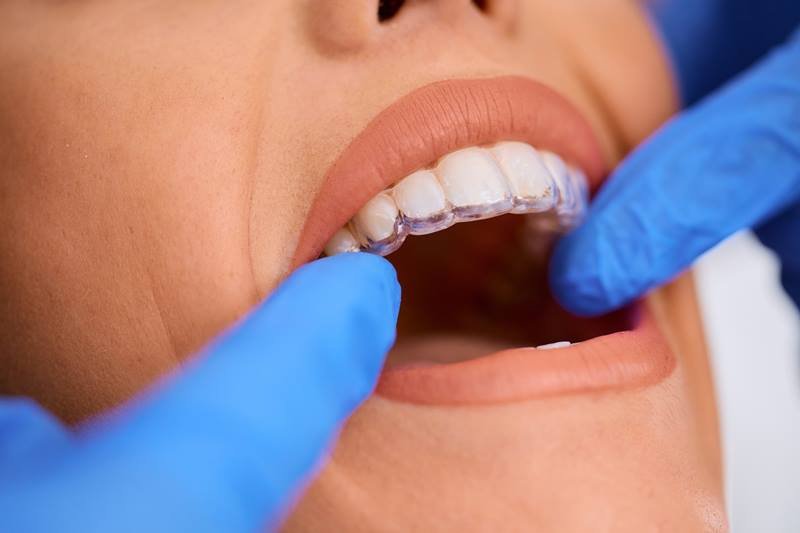
Veneers can improve the appearance of certain mildly irregular teeth, but they do not replace orthodontic treatment.
Braces and clear aligners physically move teeth into improved positions.
If you have significant crowding, spacing, or bite problems, orthodontic treatment may be recommended.
For patients interested in clear aligners, an Invisalign Specialist in Chennai can determine whether Invisalign is appropriate.
In some smile makeover cases, orthodontic treatment may be performed before cosmetic restorations to achieve a more conservative result.
Procedure & How Long They Last Can Veneers Fix Crooked Teeth?
Veneers can sometimes make mildly rotated or uneven teeth appear straighter.
However, they do not actually move the teeth.
If teeth are significantly crooked or crowded, braces or clear aligners may be a better option.
Your dentist can evaluate whether cosmetic masking or orthodontic correction would provide the healthier and more predictable result.
Can Veneers Be Placed on Any Tooth?
Not every tooth is suitable for veneers.
A dentist needs to assess:
- Enamel availability
- Tooth strength
- Bite
- Gum health
- Tooth position
- Existing restorations
- Grinding habits
- Overall oral health
Teeth with extensive decay or structural damage may require restorative treatment such as a crown rather than a veneer.
What If You Grind Your Teeth?
Teeth grinding, also known as bruxism, can place excessive forces on veneers.
Patients who grind or clench their teeth may require additional assessment before cosmetic treatment.
A customized night guard may be recommended in selected cases to protect the teeth and restorations.
Can Veneers Be Placed Over Existing Fillings?
It depends on the size and location of the filling and how much healthy tooth structure remains.
Small restorations may sometimes be incorporated into the veneer design, while heavily restored teeth may require a different restoration.
Your dentist can assess the tooth before recommending veneers.
Dental Veneers and Gum Health
Healthy gums are an important part of successful cosmetic dentistry.
Inflamed, swollen, or receding gums can affect the appearance and long-term stability of veneers.
Any active gum disease should generally be addressed before starting elective cosmetic treatment.
Maintaining good gum health after veneer placement is equally important.
Who Should Avoid Dental Veneers?
Veneers may not be suitable if you have:
- Untreated cavities
- Active gum disease
- Severe tooth damage
- Severe tooth grinding
- Certain bite problems
- Insufficient enamel
- Poor oral hygiene
- Unrealistic expectations
This does not necessarily mean cosmetic dentistry is impossible. Your dentist may first recommend treatment to improve your oral health before considering veneers.
Why Choose Dr.D’s Dentistry for Dental Veneers?
At Dr.D’s Dentistry, dental veneer treatment can be planned with a focus on aesthetics, function, facial harmony, and preservation of natural tooth structure.
A comprehensive smile evaluation can help determine whether veneers, composite bonding, teeth whitening, orthodontic treatment, or another approach is best suited to your needs.
For patients looking for a Smile Specialist in Chennai, Smile Designer in Chennai, Best Dental Clinic in Chennai, or Best Dentist near me, it is important to choose a dental team that focuses on diagnosis and individualized smile planning rather than simply placing veneers.
Dr.D’s Dentistry is conveniently located nearby to Royapettah, Mylapore, Alwarpet, and Gopalapuram, providing comprehensive dental care for patients seeking both functional and aesthetic dental treatment.
Frequently Asked Questions About Dental Veneers
1. What are dental veneers?
Dental veneers are thin custom-made restorations bonded to the front surface of teeth to improve their color, shape, size, and overall appearance.
2. How much do dental veneers cost?
The cost depends on the material, number of teeth, complexity of treatment, laboratory work, and additional procedures required. A personalized consultation is needed for an accurate estimate.
3. How long do veneers last?
Dental veneers can last for many years when properly planned, placed, and maintained. Their lifespan varies depending on oral hygiene, bite forces, material, and lifestyle habits.
4. Are dental veneers permanent?
Veneers are a long-term treatment but are not necessarily permanent. They may eventually require replacement or repair.
5. Are veneers painful?
The procedure is generally comfortable. Depending on the amount of preparation required, local anesthesia may be used. Some patients may experience temporary sensitivity afterward.
6. Do veneers damage natural teeth?
When appropriately planned and performed, modern veneer treatment can be conservative. However, some cases require tooth preparation, so it is important to discuss the amount of tooth structure that will be removed before treatment.
7. Can veneers stain?
High-quality ceramic veneers are generally resistant to many surface stains. However, the natural teeth around them can still stain, and composite veneers may be more susceptible to discoloration.
8. Can veneers fix gaps between teeth?
Veneers can sometimes close small gaps. Larger spaces may be better treated with orthodontics or another dental approach.
9. Are veneers better than braces?
Veneers and braces serve different purposes. Veneers primarily improve appearance, while braces physically move teeth and correct alignment and bite problems.
10. Can I get veneers if I grind my teeth?
Possibly, but grinding can increase the risk of veneer damage. Your dentist may recommend managing the grinding and using a protective night guard when appropriate.
Conclusion
Dental veneers can be an excellent option for improving the appearance of selected teeth and creating a more balanced, confident smile. Modern ceramic veneers can provide natural-looking results when they are carefully planned and appropriately placed.
However, veneers are not a one-size-fits-all treatment. Your dentist should evaluate your teeth, gums, bite, oral hygiene, and aesthetic goals before recommending them.
If you are considering veneers for discoloration, chipped teeth, gaps, uneven tooth shape, or a complete smile makeover, consult a qualified Smile Specialist in Chennai or Smile Designer in Chennai to understand your options.
For patients searching for the Best Dental Clinic in Chennai, Best Affordable Dental Clinic in Chennai, Best Dental Clinic near me, or Best Dental Clinic within 1 KM, choosing a clinic that prioritizes healthy teeth, conservative treatment, personalized planning, and long-term results is essential.