A straight, well-aligned A straight, well-aligned smile is not only about appearance. Proper tooth alignment can make it easier to clean your teeth, maintain healthy gums, improve your bite, and support better long-term oral health.
Today, patients have more orthodontic treatment choices than ever before. Two of the most popular options are braces and clear aligners.
Traditional braces have been used successfully for decades, while clear aligner systems have transformed orthodontic treatment by offering a more discreet alternative.
But which is better for you?
The answer depends on several factors, including your age, the complexity of your case, your lifestyle, your treatment goals, your commitment to wearing aligners, and your overall dental health.
If you are searching for the Best Dental Clinic in Chennai to improve your smile, understanding the differences between braces and clear aligners can help you make a more informed decision.
At Dr.D’s Dentistry, orthodontic treatment is planned based on the patient’s individual dental condition rather than simply choosing the most popular treatment option.
A straight, well-aligned What Are Braces?
Braces are orthodontic appliances used to gradually move teeth into better positions.
Traditional fixed braces generally consist of:
- Brackets attached to the teeth
- An orthodontic archwire
- Elastic or other components that help apply controlled forces
The braces are adjusted periodically so that the teeth gradually move toward their planned positions.
Modern braces can be more comfortable and aesthetically pleasing than older designs, and several types are available.
A straight, well-aligned What Are Clear Aligners?
Clear aligners are removable, transparent orthodontic trays designed to gradually move the teeth.
A series of custom-made aligners is created for the patient. Each aligner is generally worn for a specified period before moving to the next stage.
Clear aligners are popular because they are:
- Nearly invisible
- Removable
- Convenient for eating
- Convenient for brushing
- Discreet in appearance
However, they require significant patient compliance because they only work when they are worn as instructed.
A straight, well-aligned Braces vs Clear Aligners: Quick Comparison
| Feature | Braces | Clear Aligners |
|---|---|---|
| Appearance | Visible | More discreet |
| Removable | No | Yes |
| Eating restrictions | Some | Fewer during meals |
| Brushing | Requires extra care | Easier when removed |
| Treatment suitability | Broad range of cases | Suitable for many, but not all cases |
| Patient compliance | Less dependent on wearing time | Highly dependent on wearing time |
| Cleaning | More challenging | Usually easier |
| Dental visits | Regular adjustments/checks | Regular progress checks |
| Comfort | May cause irritation initially | Usually smooth but can cause pressure |
| Lifestyle convenience | Moderate | High |
| Best for | Many mild to complex cases | Many mild to moderate and selected complex cases |
The best option depends on your individual orthodontic diagnosis.
A straight, well-aligned How Do Braces Work?
Braces use controlled orthodontic forces to gradually move teeth.
Your orthodontist attaches brackets to the teeth and connects them using archwires.
Over time, carefully planned forces encourage the teeth to move into their desired positions.
The treatment may address:
- Crowding
- Spacing
- Rotated teeth
- Overbite
- Underbite
- Crossbite
- Certain jaw-related bite problems
The exact treatment mechanics depend on the patient’s diagnosis.
A straight, well-aligned How Do Clear Aligners Work?
Clear aligners use a series of customised trays.
Each tray is designed to move the teeth a small amount.
As you progress through the series, the teeth gradually move toward their planned positions.
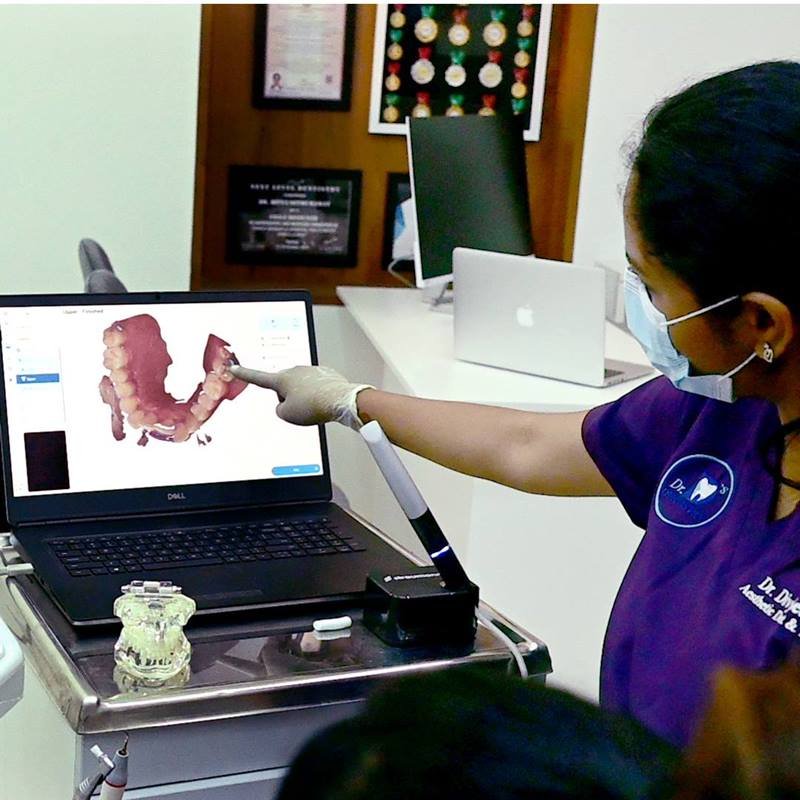
Clear aligner treatment may involve digital scanning, computer-assisted treatment planning, and a series of custom-made trays.
The dentist or orthodontist monitors your progress throughout treatment.
A straight, well-aligned Which Is More Comfortable: Braces or Clear Aligners?
Comfort varies from person to person.
Braces
You may experience:
- Pressure after adjustments
- Mild tooth soreness
- Cheek or lip irritation
- Temporary discomfort from brackets or wires
These symptoms generally improve as you adapt.
A straight, well-aligned Clear Aligners
Aligners may cause:
- Pressure or tightness
- Mild tooth soreness
- Temporary speech changes
- Irritation around the edges
Because clear aligners are smooth and do not have brackets or wires, some patients find them more comfortable for everyday use.
However, comfort should not be the only factor used to choose treatment.
A straight, well-aligned Which Looks Better?
If appearance during treatment is a major concern, clear aligners generally have an advantage.
They are transparent and much less noticeable than conventional metal braces.
This can make them attractive to:
- Working professionals
- College students
- Adults
- People who frequently attend meetings or events
- Patients who prefer discreet treatment
Braces, however, have also become more aesthetic. Ceramic or tooth-coloured braces may be less noticeable than traditional metal brackets.
A straight, well-aligned Which Is Better for Complex Cases?
This is an important consideration.
Traditional braces can be used for a very broad range of orthodontic problems.
Clear aligners can also treat many types of malocclusion, but their suitability depends on the specific case and the clinician’s treatment planning.
More complex cases involving significant tooth movement, severe rotations, certain bite problems, or other orthodontic challenges may require braces or a carefully planned combination approach.
The important question is not:
“Which treatment is more advanced?”
Instead, ask:
“Which treatment can predictably achieve the desired result in my particular case?”
A straight, well-aligned Can Clear Aligners Fix Crowded Teeth?
Yes, clear aligners can treat many cases of dental crowding.
However, the severity and cause of crowding matter.
Mild to moderate crowding can often be treated effectively with aligners.
More severe crowding may require additional orthodontic procedures or alternative treatment approaches.
A detailed orthodontic assessment is necessary before deciding.
A straight, well-aligned Can Braces Fix More Problems Than Clear Aligners?
Braces have traditionally been considered highly versatile because they provide continuous control of tooth movement.
However, modern clear aligner systems have expanded considerably and can address many orthodontic conditions.
The difference is becoming less about a simple “braces can do it, aligners cannot” rule and more about:
- Case complexity
- Clinician experience
- Treatment planning
- Patient compliance
- Tooth movement required
- Biological response
Your orthodontic provider should explain which option is most predictable for your case.
A straight, well-aligned Which Treatment Is Faster?
There is no universal answer.
Treatment time depends on:
- Severity of the problem
- Number of teeth involved
- Type of tooth movement
- Patient age
- Biological response
- Compliance
- Treatment plan
Some mild cases can be completed relatively quickly with either option.
Complex orthodontic cases can take significantly longer.
Clear aligners are not automatically faster than braces.
A straight, well-aligned How Long Do Braces Take?
Orthodontic treatment duration varies widely.
Many patients may require treatment for around 12–24 months, but some cases are shorter and others take longer.
Your orthodontist can provide a more realistic estimate after examining your teeth and bite.
A straight, well-aligned How Long Do Clear Aligners Take?
Treatment time varies according to the complexity of the case.
Some mild alignment cases may take only several months, while more complex treatment can take a year or longer.
One of the most important factors is wearing the aligners as prescribed.
If aligners are not worn for the recommended duration, treatment can take longer.
A straight, well-aligned Which Requires More Discipline?
Clear aligners require significant patient responsibility.
Because they are removable, it can be tempting to:
- Remove them too frequently
- Forget to put them back
- Wear them for fewer hours
- Skip aligners
- Move to the next aligner too early
Consistent wear is essential for predictable treatment.
Braces are fixed to your teeth, so compliance is less dependent on remembering to wear the appliance.
For patients who know they may struggle with compliance, braces may sometimes be a better option.
A straight, well-aligned Can You Eat Normally With Braces?
Braces require some dietary precautions.
You may be advised to avoid or limit very hard and sticky foods because they can damage brackets or wires.
Foods that may require caution include:
- Hard nuts
- Sticky sweets
- Chewing gum
- Very hard foods
- Ice
Your orthodontist will provide specific dietary instructions.
Can You Eat Normally With Clear Aligners?
One of the biggest lifestyle advantages of clear aligners is that they are removable.
Generally, you remove the aligners before eating and drinking anything other than water.
This means you do not have the same food restrictions associated with fixed braces.
However, the aligners need to be cleaned properly before being placed back in your mouth.
Which Is Easier to Clean?
Clear aligners generally make daily brushing easier because they can be removed.
With braces, food and plaque can accumulate around:
- Brackets
- Wires
- Gum margins
Patients wearing braces therefore need to be particularly careful about brushing and interdental cleaning.
Clear aligners do not eliminate the need for excellent oral hygiene.
In fact, because aligners are worn over the teeth, maintaining clean teeth before putting them back in is particularly important.
Braces and Oral Hygiene
Maintaining good oral hygiene during braces treatment is essential.
Your orthodontic team may recommend:
- Fluoride toothpaste
- Interdental brushes
- Floss threaders
- Water flossers
- Special orthodontic toothbrushes
Poor oral hygiene during orthodontic treatment can increase the risk of:
- Tooth decay
- White spot lesions
- Gum inflammation
- Bad breath
Clear Aligners and Oral Hygiene
Clear aligners can make brushing and flossing more convenient because they are removable.
However, patients should avoid placing dirty aligners over unclean teeth.
A good routine includes:
- Remove the aligners.
- Brush your teeth.
- Clean between your teeth.
- Clean the aligners as instructed.
- Reinsert them.
Can You Play Sports With Braces?
Yes, but protective measures are important.
Patients involved in contact sports should discuss the use of an appropriate mouthguard with their orthodontic provider.
Braces can increase the risk of soft-tissue injury if there is facial trauma.
Can You Play Sports With Clear Aligners?
Clear aligners may be convenient for many sports activities because they are removable.
However, if you participate in contact sports, ask your dentist or orthodontist about appropriate mouth protection.
Do not assume that your regular aligner is a substitute for a sports mouthguard.
Braces vs Clear Aligners for Adults
Adults increasingly choose orthodontic treatment to improve both dental health and smile aesthetics.
Clear aligners can be particularly appealing to adults because they are discreet and removable.
However, braces remain an effective option for adults and may be recommended when more complex tooth movement is required.
The best treatment is the one that provides predictable results while fitting your lifestyle.
Braces vs Clear Aligners for Teenagers
Teenagers can be suitable candidates for both braces and clear aligners.
The choice depends on:
- Orthodontic needs
- Oral hygiene
- Lifestyle
- Compliance
- Personal preference
- Type of bite problem
For teenagers who are responsible about wearing and caring for aligners, clear aligners can be an attractive option.
For those who may frequently forget or lose removable appliances, braces may be more practical.
Can Clear Aligners Treat Bite Problems?
Clear aligners can treat many bite-related issues, including selected cases of:
- Overbite
- Underbite
- Crossbite
- Open bite
However, the complexity of the bite problem is important.
Severe skeletal discrepancies may require orthodontic treatment combined with other approaches.
A proper clinical and radiographic assessment is necessary before deciding.
What About Jaw Problems?
Not every bite problem is simply a tooth-position problem.
Some patients have underlying skeletal differences involving the upper and lower jaws.
In such cases, braces or clear aligners alone may not be sufficient.
Your dentist or orthodontist may recommend additional evaluation and treatment planning.
Do Braces Hurt More Than Clear Aligners?
Both can cause temporary discomfort.
Braces may cause soreness after adjustments and irritation from brackets or wires.
Clear aligners typically produce pressure as they move the teeth.
The level of discomfort varies significantly between individuals.
Neither treatment should cause severe or persistent pain.
If you experience significant pain, contact your dental professional.
How Often Do You Need Dental Appointments?
Both treatments require regular monitoring.
With braces, appointments may involve:
- Wire adjustments
- Bracket checks
- Progress evaluation
- Elastic changes
With clear aligners, appointments may involve:
- Progress assessment
- Fit evaluation
- Attachment checks
- New aligner stages
- Treatment refinements
The exact appointment schedule depends on your treatment plan.
What Are Attachments in Clear Aligner Treatment?
Some clear aligner cases require small tooth-coloured attachments.
These are placed temporarily on selected teeth and help the aligners achieve specific tooth movements.
Attachments may make aligners slightly more noticeable, but they are generally much less visible than conventional braces.
Can Clear Aligners Be Removed for Special Occasions?
One of the major advantages of clear aligners is that they can be removed when necessary.
However, removing them too frequently or for extended periods can reduce treatment effectiveness.
Special occasions should not become a reason for consistently inadequate wear.
Your treatment works best when aligners are worn according to your orthodontist’s instructions.
Can You Kiss or Speak Normally With Clear Aligners?
Most patients can speak normally after an adjustment period.
Some people may notice a temporary change in speech when they first start wearing aligners.
This usually improves as the tongue adapts.
Clear aligners should not prevent normal social interaction.
Can You Whiten Teeth While Wearing Aligners?
Some clear aligner systems may allow whitening approaches under professional guidance, but whitening should not be started without discussing it with your dentist.
If whitening is planned, timing matters because the final tooth colour can influence the aesthetics of future restorations.
Braces, Clear Aligners and Dental Veneers
If your main concern is tooth shape, colour, or minor cosmetic imperfections, orthodontic treatment may not be the only option.
Some patients may consider veneers, while others may benefit from orthodontic alignment first.
In many cases, moving the natural teeth into a healthier position is more conservative than covering them with restorations.
A Smile Specialist in Chennai can evaluate whether orthodontics, cosmetic dentistry, or a combination approach is most appropriate.
Why Oral Health Should Come Before Orthodontic Treatment
Before starting braces or clear aligners, your dentist should check for:
- Tooth decay
- Gum disease
- Infections
- Poor oral hygiene
- Existing dental restorations
- Other oral health concerns
Active dental disease should generally be addressed before orthodontic treatment.
Healthy teeth and gums provide a better foundation for predictable orthodontic care.
What If You Need a Root Canal?
If a tooth requires root canal treatment, it may need to be treated before or during orthodontic treatment depending on the clinical situation.
A Root Canal Specialist in Chennai can evaluate whether a problematic tooth can be preserved and how it fits into the overall orthodontic treatment plan.
Orthodontic treatment should always be coordinated with the patient’s broader dental needs.
What If You Have Missing Teeth?
Patients with missing teeth may require a comprehensive treatment plan.
Depending on the situation, orthodontic treatment may be used to:
- Improve spacing
- Prepare spaces for implants
- Improve tooth position
- Create better conditions for restorative treatment
After orthodontic alignment, an Implant Specialist in Chennai may assess the appropriate replacement option if an implant is required.
Can Children Get Clear Aligners?
Clear aligners may be appropriate for selected younger patients, depending on their dental development and ability to comply with treatment instructions.
However, children’s orthodontic treatment should be planned according to growth, eruption of permanent teeth, and the specific orthodontic problem.
Parents searching for a Kid Specialist in Chennai can begin with a comprehensive dental assessment and discuss whether an orthodontic evaluation is appropriate.
How Much Do Braces and Clear Aligners Cost?
Treatment cost varies depending on:
- Type of braces
- Clear aligner system
- Complexity of the case
- Treatment duration
- Number of aligners
- Required attachments
- Refinements
- Additional procedures
- Clinician expertise
Clear aligners may have a higher initial cost in some cases, but the price varies considerably between treatment systems and individual cases.
Rather than choosing treatment solely based on price, consider the quality of diagnosis, treatment planning, monitoring, and long-term results.
If affordability is important to you, ask for a complete treatment estimate before starting.
Are Clear Aligners Worth It?
For the right patient, clear aligners can offer significant lifestyle benefits.
They may be worth considering if you value:
- Discreet appearance
- Removability
- Easier eating
- Convenient brushing
- Minimal visible orthodontic hardware
However, they require discipline.
If you are unlikely to wear the aligners consistently, braces may provide a more predictable option.
Are Braces Better Than Clear Aligners?
Not necessarily.
Braces are not “better” simply because they are traditional, and clear aligners are not “better” simply because they are newer.
Each treatment has advantages.
Braces may be preferable when:
- The case is complex
- Significant tooth movement is required
- Patient compliance with removable appliances is a concern
- Continuous fixed orthodontic forces are advantageous
Clear aligners may be preferable when:
- Discreet treatment is important
- The case is suitable for aligners
- The patient is committed to wearing them
- Removability is important
- The patient wants fewer lifestyle restrictions
The right decision should be based on diagnosis rather than marketing.
How to Choose Between Braces and Clear Aligners
Ask your orthodontic provider:
1. What exactly needs to be corrected?
Understanding the diagnosis helps you understand why a particular treatment is recommended.
2. Can both options treat my case?
If both can, ask about the advantages and disadvantages of each.
3. How long will treatment take?
Ask for a realistic estimated timeline.
4. How many hours should I wear clear aligners?
Understand the compliance requirements before choosing them.
5. What happens if I lose an aligner?
Know the replacement process and potential additional cost.
6. Will I need attachments?
Ask whether attachments, elastics, or other components will be necessary.
7. What happens after treatment?
Retainers are usually an important part of maintaining orthodontic results.
The Importance of Retainers
Orthodontic treatment does not end when your braces are removed or your final aligner is completed.
Teeth naturally have a tendency to shift over time.
Retainers help maintain the new tooth positions.
Depending on your treatment plan, you may be prescribed:
- Removable retainers
- Fixed retainers
- A combination of both
Following your retention plan is essential for protecting the results of your orthodontic treatment.
Why Choose Dr.D’s Dentistry?
At Dr.D’s Dentistry, orthodontic treatment is approached with a focus on diagnosis, individualised planning, aesthetics, function, and long-term oral health.
Before recommending braces or clear aligners, your dental condition can be evaluated to understand:
- Tooth alignment
- Bite
- Gum health
- Tooth condition
- Existing restorations
- Spacing
- Crowding
- Overall smile aesthetics
If you are searching for the Best Dental Clinic in Chennai for orthodontic and comprehensive dental care, a detailed consultation can help you understand whether braces or clear aligners are more appropriate for you.
Dr.D’s Dentistry is conveniently located for patients from Royapettah, Mylapore, Alwarpet, and Gopalapuram.
If you are searching online for the Best Dental Clinic near me, Best Dentist near me, or Best Dental Clinic within 1 KM, having access to a conveniently located clinic can make regular orthodontic follow-up easier.
For patients specifically considering clear aligner treatment, you can consult an Invisalign Specialist in Chennai to determine whether Invisalign or another clear aligner system is suitable for your case.
We also provide comprehensive dental care, including preventive dentistry, root canal treatment, cosmetic dentistry, smile design, implant dentistry, and children’s dental care.
Frequently Asked Questions About Braces and Clear Aligners
Are clear aligners better than braces?
Not for everyone. Clear aligners offer greater discretion and removability, while braces can be highly effective for a broad range of orthodontic problems. The best option depends on your case.
Are clear aligners painful?
They can cause temporary pressure or mild soreness as the teeth move. Significant or persistent pain should be discussed with your dentist.
How long do braces take?
Treatment often takes around 12–24 months, but the actual duration depends on the complexity of your case and your response to treatment.
How long do clear aligners take?
Some mild cases may be completed within several months, while more complex cases can take a year or longer.
Can I eat with clear aligners?
You generally remove clear aligners before eating. Water is usually the preferred drink while wearing them unless your orthodontist advises otherwise.
Can I eat normally with braces?
You can eat most foods, but very hard and sticky foods may need to be avoided to prevent damage to brackets and wires.
Which is easier to clean?
Clear aligners are removable, which generally makes brushing and flossing easier. Braces require additional cleaning around brackets and wires.
Can adults get braces?
Yes. Adults can undergo orthodontic treatment when their teeth and gums are healthy and the treatment is clinically appropriate.
Can adults use clear aligners?
Yes. Clear aligners are widely used for adults, provided the patient’s orthodontic problem is suitable and they can follow the wear instructions.
Do clear aligners work for severe crowding?
They can treat many crowding cases, but severe cases may require additional procedures or a different orthodontic approach.
Do I need retainers after braces or clear aligners?
Yes. Retention is an important part of maintaining orthodontic results because teeth can shift over time.
Which is cheaper: braces or clear aligners?
The cost varies considerably depending on the treatment complexity and system used. A personalised treatment plan is needed for an accurate comparison.
Final Thoughts
Both braces and clear aligners can be excellent orthodontic treatment options.
Braces offer a highly versatile and proven approach for many types of tooth and bite problems. Clear aligners provide a discreet, removable alternative that can be particularly attractive to adults and patients who want greater lifestyle flexibility.
The best treatment is not necessarily the newest or most popular option.
It is the treatment that can safely and predictably achieve your desired result while fitting your oral health, lifestyle, and ability to follow the treatment plan.
If you are unsure whether braces or clear aligners are right for you, begin with a professional orthodontic evaluation.
For patients looking for the Best Dental Clinic in Chennai near Royapettah, Mylapore, Alwarpet, and Gopalapuram, Dr.D’s Dentistry can help you understand your orthodontic options and develop a personalised treatment plan for a healthier, more confident smile.