
A damaged, weakened A damaged, weakened, heavily restored, or severely decayed tooth may need more than a simple filling to restore its strength and appearance. In such situations, a dental crown can provide protection while also helping restore normal chewing function and aesthetics.
A damaged, weakened Dental crowns are among the most commonly used restorative treatments in modern dentistry. They can be used after root canal treatment, to protect a cracked or weakened tooth, to restore severely damaged teeth, and sometimes as part of a comprehensive smile makeover.
At Dr.D’s Dentistry, we believe that a dental crown should not simply cover a tooth. The treatment should be carefully planned to restore function, protect the remaining tooth structure, and achieve a natural-looking result.
This comprehensive guide explains what a dental crown is, the different types available, how the procedure works, how much it may cost, how long crowns can last, and how to care for them.
A damaged, weakened What Is a Dental Crown?
A dental crown is a custom-made restoration that fits over a prepared tooth.
It is designed to restore:
- Tooth shape
- Tooth strength
- Tooth function
- Tooth appearance
- Proper bite
- Protection of remaining tooth structure
A crown may be recommended when a tooth has lost a substantial amount of its natural structure and a conventional filling may not provide adequate strength.
Crowns can be made from different materials, including ceramic, porcelain, zirconia, metal, and porcelain-fused-to-metal materials.
The most suitable type depends on the location of the tooth, functional demands, aesthetic expectations, available tooth structure, and individual treatment requirements.
A damaged, weakened Why Might You Need a Dental Crown?
There are several situations in which a dentist may recommend a crown.
A damaged, weakened 1. Severely Decayed Tooth
If extensive tooth decay has destroyed a large portion of a tooth, a filling may not provide sufficient structural support.
A crown can help restore the remaining tooth and protect it from further damage.
A damaged, weakened 2. After Root Canal Treatment
Teeth that have undergone root canal treatment may require additional protection depending on the amount of tooth structure remaining and the tooth’s location.
Posterior teeth, in particular, experience significant chewing forces.
A crown may help protect a significantly weakened tooth from fracture.
A damaged, weakened 3. Cracked or Fractured Tooth
A crown can sometimes help protect a structurally compromised tooth by covering and reinforcing the remaining tooth structure.
However, not every cracked tooth can be saved with a crown. The location and extent of the crack must be carefully evaluated.
A damaged, weakened 4. Large Existing Fillings
A tooth with a very large filling may have limited remaining natural tooth structure.
If the tooth is structurally weakened, a crown may be considered to provide additional protection.
A damaged, weakened . Cosmetic Reasons
Crowns can sometimes be used to improve the shape, colour, or appearance of a severely damaged or discoloured tooth.
However, for purely cosmetic concerns, less invasive options may sometimes be preferable.
A damaged, weakened 6. Dental Implant Restoration
A crown is commonly used as the visible tooth-like restoration attached to a dental implant.
In such cases, the implant replaces the tooth root while the crown replaces the visible portion of the tooth.
A damaged, weakened Types of Dental Crowns
Dental crowns are available in several materials. Each has its own advantages and limitations.
A damaged, weakened 1. Zirconia Crowns
Zirconia is a strong ceramic material increasingly used in restorative dentistry.
Advantages include:
- High strength
- Good durability
- Metal-free composition
- Natural-looking appearance
- Suitable for many front and back teeth
Modern zirconia materials can provide an excellent combination of strength and aesthetics.
A damaged, weakened 2. All-Ceramic Crowns
All-ceramic crowns are made entirely from ceramic materials.
They can provide excellent aesthetics because ceramic can closely replicate the appearance of natural tooth structure.
They are particularly useful when appearance is a major consideration.
A damaged, weakened 3. Porcelain-Fused-to-Metal Crowns
These crowns have a metal substructure covered by a porcelain layer.
They have been used successfully for many years and can offer a combination of strength and aesthetics.
However, some patients may prefer newer metal-free options because of their aesthetic preferences.
A damaged, weakened . Metal Crowns
Metal crowns are highly durable and can withstand significant chewing forces.
They may be useful in selected situations, particularly where strength is the primary concern.
The major disadvantage is their metallic appearance, which makes them less popular for highly visible teeth.
5. Lithium Disilicate Crowns
Lithium disilicate is a high-strength glass ceramic that can provide excellent aesthetics.
It may be used for selected front and back teeth depending on the patient’s bite, tooth condition, and clinical requirements.
Which Dental Crown Is Best?
There is no single crown material that is ideal for every patient.
Your dentist considers factors such as:
- Tooth location
- Amount of remaining tooth structure
- Bite forces
- Bruxism or teeth grinding
- Aesthetic requirements
- Gum health
- Existing restorations
- Budget
- Overall treatment plan
A crown should be selected based on clinical requirements rather than simply choosing the most expensive material.
Dental Crown Procedure: Step-by-Step
The crown procedure usually involves several stages.
Step 1: Dental Examination
The dentist first examines the tooth and surrounding tissues.
X-rays may be recommended to evaluate:
- Root condition
- Bone support
- Existing infection
- Previous root canal treatment
- Remaining tooth structure
This assessment helps determine whether a crown is appropriate.
Step 2: Treatment Planning
Your dentist discusses the available treatment options and recommends the most appropriate crown material based on your needs.
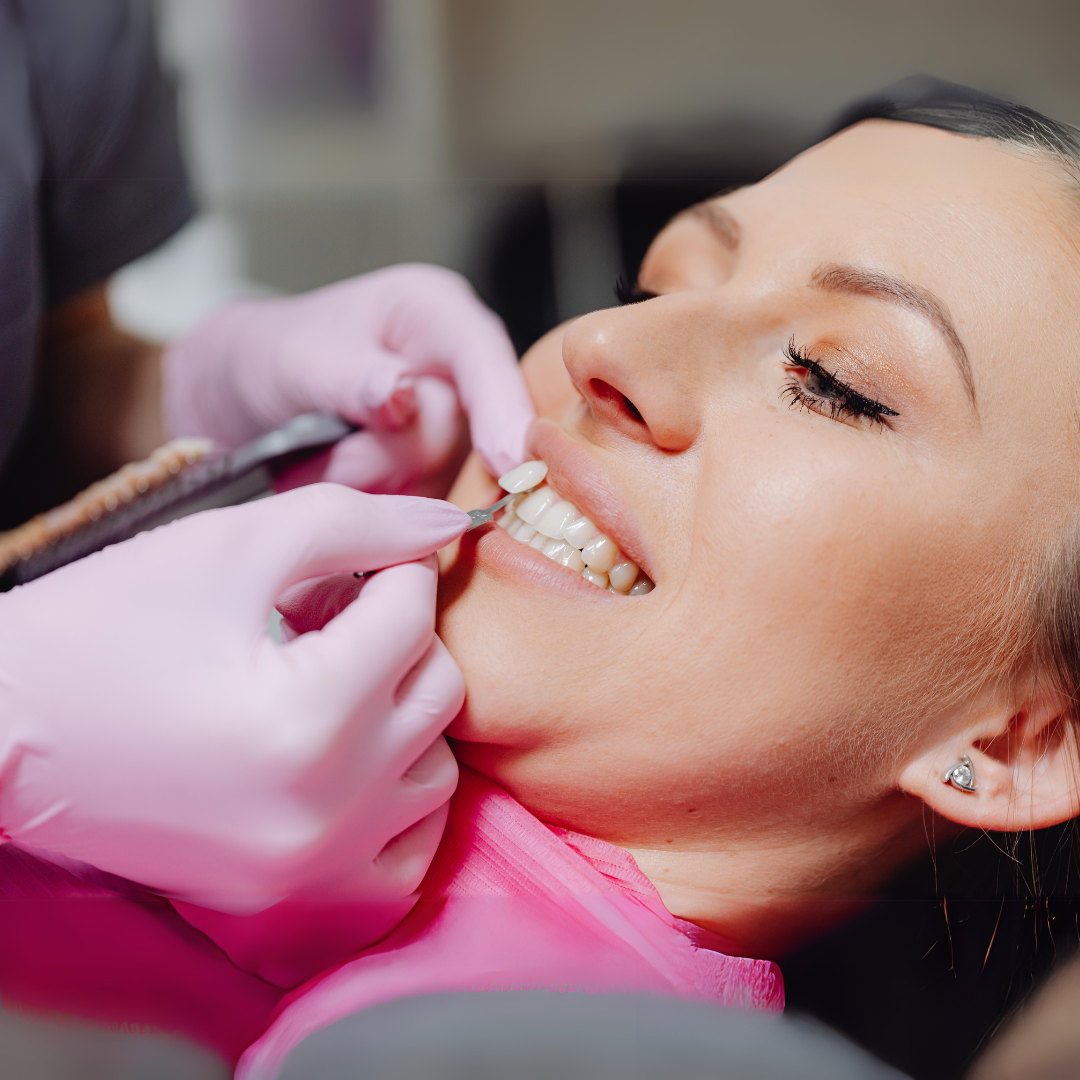
The colour, shape, size, and appearance of the final crown can also be planned.
Step 3: Tooth Preparation
The tooth is carefully reshaped to create adequate space for the crown.
The amount of tooth preparation depends on the type of crown and the existing tooth structure.
Step 4: Digital Impression or Dental Impression
Once the tooth has been prepared, the dentist records its shape.
Modern dental clinics may use an intraoral scanner to create a digital impression.
Digital scanning can provide a comfortable alternative to traditional impression materials in suitable cases.
Step 5: Temporary Crown
Depending on the case, a temporary crown may be placed while the permanent restoration is being fabricated.
It protects the prepared tooth and allows you to function during the laboratory stage.
Step 6: Crown Fabrication
The final crown is fabricated according to the dentist’s prescription and the planned design.
Advanced dental laboratories can create highly precise restorations using modern digital workflows.
Step 7: Try-In and Evaluation
The dentist evaluates the crown before permanent placement.
Important factors include:
- Fit
- Shape
- Colour
- Contacts between teeth
- Bite
- Gum relationship
- Overall appearance
Step 8: Permanent Cementation
Once everything is satisfactory, the crown is permanently bonded or cemented into position using an appropriate dental cement or bonding protocol.
Is Getting a Dental Crown Painful?
The crown procedure is generally performed under local anaesthesia, so you should not experience significant pain during tooth preparation.
Some people may experience temporary sensitivity or mild discomfort after the procedure.
This usually settles as the tooth and surrounding tissues adapt.
If pain persists, becomes severe, or occurs spontaneously, you should contact your dentist for an evaluation.
How Long Does a Dental Crown Take?
The total treatment time varies depending on the type of crown, laboratory workflow, tooth condition, and clinic’s digital capabilities.
Some crowns can be completed relatively quickly using advanced digital dentistry workflows, while conventional laboratory-made crowns may require multiple appointments.
If the tooth requires additional treatment such as root canal therapy, the overall treatment time will be longer.
Dental Crown Cost in Chennai
One of the most frequently asked questions is: How much does a dental crown cost?
There is no single fixed price for every dental crown.
The cost can vary depending on:
- Crown material
- Type of crown
- Tooth location
- Complexity of the case
- Laboratory charges
- Digital workflow
- Additional procedures required
- Dentist’s expertise
- Whether root canal treatment is required
- Whether a post and core are required
For this reason, an accurate dental crown cost can usually be provided only after examining the tooth and determining the appropriate treatment plan.
Patients searching for a Best Affordable Dental Clinic in Chennai should consider the quality of the restoration, materials used, clinical expertise, and long-term value rather than choosing a crown solely based on the lowest price.
How Long Do Dental Crowns Last?
A well-planned and properly maintained dental crown can last for many years.
However, there is no guaranteed lifespan because crowns are exposed to chewing forces every day.
Their longevity depends on:
- Oral hygiene
- Bite forces
- Tooth location
- Crown material
- Quality of fit
- Gum health
- Teeth grinding
- Dietary habits
- Regular dental check-ups
- Care of the underlying tooth
Some crowns may remain functional for well over a decade, while others may require earlier replacement depending on individual circumstances.
What Can Cause a Dental Crown to Fail?
Several factors can affect the lifespan of a crown.
Tooth Decay Around the Crown
Although the crown itself cannot develop decay, the natural tooth underneath and around its margins can.
Good oral hygiene is therefore essential.
Poor Oral Hygiene
Plaque accumulation around the crown margins can contribute to gum inflammation and decay.
Teeth Grinding
Bruxism can place excessive forces on both natural teeth and crowns.
Patients who grind their teeth may benefit from a customised night guard.
Crown Fracture
Although modern crown materials can be highly durable, excessive forces can sometimes cause chipping or fracture.
Underlying Tooth Problems
A crown cannot compensate for an unhealthy tooth underneath it.
If infection or structural problems develop in the underlying tooth, further treatment may be necessary.
How Do You Care for a Dental Crown?
A crowned tooth should be cared for much like a natural tooth.
Brush Twice a Day
Use a fluoride toothpaste and brush carefully around the crown and gumline.
Floss Daily
Clean around and between the crowned tooth to prevent plaque accumulation.
Avoid Excessively Hard Objects
Do not use your teeth to open packages or bite hard non-food objects.
Manage Teeth Grinding
If you grind your teeth at night, discuss this with your dentist.
Attend Regular Dental Check-Ups
Regular examinations can help identify problems before they become significant.
Can You Eat Normally After Getting a Crown?
Once the permanent crown has been securely placed and any local anaesthesia has worn off, most patients can return to normal eating.
Your dentist may recommend avoiding particularly hard or sticky foods for a short period depending on the procedure and cementation protocol.
If you have a temporary crown, additional care may be required until the permanent crown is placed.
Can a Crown Look Like a Natural Tooth?
Yes.
Modern ceramic and zirconia crowns can be designed to closely resemble natural teeth.
The dentist and dental laboratory can consider:
- Tooth colour
- Shape
- Size
- Translucency
- Surface texture
- Alignment
- Gum relationship
For front teeth, these details are particularly important because even small differences can affect the overall appearance of the smile.
Dental Crowns for Front Teeth
Front teeth are highly visible, so aesthetics are usually a major consideration.
All-ceramic, lithium disilicate, and selected zirconia restorations can provide excellent aesthetic results in appropriate cases.
The best material depends on the patient’s bite, tooth condition, aesthetic expectations, and functional requirements.
Dental Crowns for Back Teeth
Back teeth experience greater chewing forces.
Therefore, strength and durability become particularly important.
Zirconia, metal, and other high-strength materials may be considered depending on the individual case.
Your dentist will recommend the appropriate material based on your functional requirements.
Dental Crown vs Dental Filling
A filling is generally used when a tooth has a relatively limited amount of damage.
A crown may be recommended when the tooth has lost a significant amount of structure and requires greater protection.
The decision depends on how much healthy tooth structure remains.
Whenever possible, preserving natural tooth structure is an important principle of restorative dentistry.
Dental Crown vs Veneer
Although crowns and veneers can both improve tooth appearance, they are fundamentally different.
A veneer generally covers the front surface of a tooth and is primarily used for selected cosmetic corrections.
A crown covers a much larger portion of the tooth and is generally used when substantial structural restoration is required.
Choosing between them requires a clinical examination.
Dental Crown After Root Canal Treatment
Root canal treatment removes infection and saves a tooth that might otherwise require extraction.
However, the tooth may have significant loss of natural structure due to decay, previous restorations, fractures, or the access cavity created during treatment.
A crown may therefore be recommended to provide additional protection in appropriate cases.
If you are looking for a Root Canal Specialist in Chennai, proper assessment of the remaining tooth structure is essential before deciding on the final restoration.
Dental Crowns and Smile Design
Crowns can sometimes form part of a comprehensive smile makeover.
However, placing crowns purely for cosmetic reasons should be carefully considered because tooth preparation is involved.
At Dr.D’s Dentistry, smile planning may take into account:
- Tooth proportions
- Smile line
- Facial features
- Tooth colour
- Tooth position
- Gum display
- Bite
- Overall facial aesthetics
This comprehensive approach is important for patients seeking a Smile specialist in Chennai or Smile Designer in Chennai.
Dental Crowns and Invisalign
If you are considering both orthodontic treatment and dental crowns, treatment sequencing is important.
Invisalign specialist in Chennai treatment focuses on improving tooth alignment using clear aligners, while crowns restore damaged or weakened teeth.
Depending on the patient’s condition, orthodontic treatment may be planned before restorative treatment to achieve an appropriate final tooth position.
Dental Crowns and Dental Implants
When a natural tooth cannot be saved and must be replaced, a dental implant may be considered.
A dental implant replaces the missing tooth root, while a crown is attached to the implant to restore the visible tooth.
Patients searching for an Implant Specialist in Chennai should understand that implant treatment involves several stages, including diagnosis, implant placement, healing, and final crown restoration.
Can a Dental Crown Be Repaired?
In some situations, a damaged crown may be repairable.
However, replacement may be recommended if:
- The crown is severely fractured
- The underlying tooth is decayed
- The crown no longer fits properly
- There is recurrent infection
- The supporting tooth has fractured
- The restoration has reached the end of its functional lifespan
The dentist needs to determine whether the problem is with the crown, the tooth underneath it, or both.
Signs That Your Dental Crown Needs Attention
Contact your dentist if you notice:
- Pain while biting
- Persistent sensitivity
- Crown mobility
- A chipped crown
- A fractured crown
- Food trapping around the crown
- Swelling near the tooth
- Bleeding or gum irritation
- Bad taste or odour around the crown
- A change in your bite
Early assessment may prevent a minor problem from becoming a major one.
Frequently Asked Questions About Dental Crowns
1. How long does a dental crown last?
A well-maintained crown can last many years, but its lifespan varies depending on oral hygiene, bite forces, material, tooth condition, and maintenance.
2. Is a dental crown painful?
The procedure is performed under local anaesthesia. Temporary sensitivity or mild discomfort may occur after treatment.
3. What is the best material for a dental crown?
There is no universally best material. Zirconia, ceramic, lithium disilicate, porcelain-fused-to-metal, and metal crowns may each be suitable in different situations.
4. How much does a dental crown cost in Chennai?
The cost varies according to the material, laboratory, complexity, tooth condition, and additional treatment required. An examination is necessary for an accurate estimate.
5. Can a crowned tooth get cavities?
Yes. The crown itself does not decay, but the natural tooth underneath or around its margins can develop decay.
6. Can I brush and floss normally with a crown?
Yes. Regular brushing and flossing are essential for maintaining the tooth and surrounding gums.
7. Can a dental crown look natural?
Modern ceramic and zirconia crowns can be designed to closely match natural teeth in appropriate cases.
8. Do all root canal-treated teeth need crowns?
Not necessarily. The need depends on the tooth type, remaining tooth structure, functional forces, and overall condition of the tooth.
9. Can a crown be whitened?
Whitening primarily changes the colour of natural tooth structure. Existing crowns generally do not whiten in the same way.
10. When should a crown be replaced?
A crown may need replacement if it is fractured, poorly fitting, excessively worn, associated with recurrent decay, or if the underlying tooth develops a significant problem.
Choosing the Right Dental Clinic for Your Crown Treatment
A dental crown is a long-term restoration, so selecting the right dental clinic is important.
Patients searching for the Best Dental Clinic near me, Best Dentist near me, or Best Dental Clinic within 1 KM should consider more than convenience.
Look for a clinic that provides:
- Comprehensive diagnosis
- Appropriate treatment planning
- Modern dental technology
- Quality restorative materials
- Experienced dental professionals
- Proper sterilisation and infection-control protocols
- Good communication
- Appropriate follow-up care
A crown should be planned around the health and function of the tooth—not simply around its appearance.
Why Choose Dr.D’s Dentistry for Dental Crowns?
At Dr.D’s Dentistry, restorative dentistry focuses on preserving natural teeth whenever possible while restoring strength, function, and aesthetics.
Every crown case is assessed individually. The treatment plan takes into consideration the condition of the tooth, remaining tooth structure, bite, aesthetic requirements, and long-term oral health.
Our clinic is conveniently located for patients from Royapettah, Mylapore, Alwarpet, and Gopalapuram, making it accessible to those searching for a Best Dental Clinic in Chennai.
Whether you need a crown after root canal treatment, a restoration for a severely damaged tooth, or a crown as part of implant treatment or smile rehabilitation, personalised planning is essential.
Final Thoughts
A dental crown can restore a damaged tooth, protect weakened tooth structure, improve chewing function, and provide a natural-looking appearance.
The right crown depends on several factors, including the tooth’s condition, location, bite, aesthetic requirements, material selection, and long-term treatment plan.
While the initial dental crown cost is an important consideration, the quality of diagnosis, preparation, crown fabrication, fitting, and maintenance can have a major impact on the longevity of the restoration.
If you have a broken, heavily filled, discoloured, or root canal-treated tooth, consult a dentist to determine whether a crown is the right solution.
For patients looking for a Best Affordable Dental Clinic in Chennai around Royapettah, Mylapore, Alwarpet, and Gopalapuram, Dr.D’s Dentistry provides comprehensive restorative, cosmetic, endodontic, implant, and smile-focused dental care.

